How we picked
Medical device sales has a tighter set of CRM requirements than almost any other industry. Account complexity is extreme — a single hospital system may have dozens of stakeholders across clinical, procurement, and C-suite, all connected under one IDN umbrella. Sales cycles are long — capital equipment deals routinely run 18–36 months from first clinical champion contact to signed purchase order. Compliance documentation matters — rep access logs, conflict-of-interest disclosures (Sunshine Act), and complaint tracking live alongside sales data. And field reps need mobile-first tools that work in OR corridors and materials management offices. Every CRM on this list was selected for its ability to handle at least three of those four requirements.
What to consider
- Mid-size or enterprise medical device company with a field sales team and complex IDN accounts → Salesforce. The de facto standard in MedTech. Salesforce Health Cloud adds HCP and IDN-aware data models; the AppExchange has MedTech-specific ISV apps for consignment, Sunshine Act reporting, and clinical trial tracking. The implementation cost is real — budget 3–6 months and a dedicated admin.
- Organization already running Microsoft 365 and Azure → Microsoft Dynamics. Natively integrates with Teams, Outlook, and SharePoint. Dynamics Field Service handles loaner and consignment workflows. The licensing model can be friendlier than Salesforce for companies already in the Microsoft ecosystem.
- Medical device company that wants structured sales methodology enforcement without Salesforce overhead → Creatio. Studio-level process automation lets you build the exact sales process your team follows — stage gates, required fields at each stage, approval workflows. HIPAA-ready deployment options. Better total cost of ownership than Salesforce for teams under 50 reps.
- Device startup or regional company that needs strong marketing alongside a clean sales pipeline → HubSpot. The best option when inbound and content marketing (clinical white papers, surgeon case studies) are as important as outbound field sales. HubSpot's marketing and CRM in one platform avoids the integration overhead. Grows with the company up to mid-market.
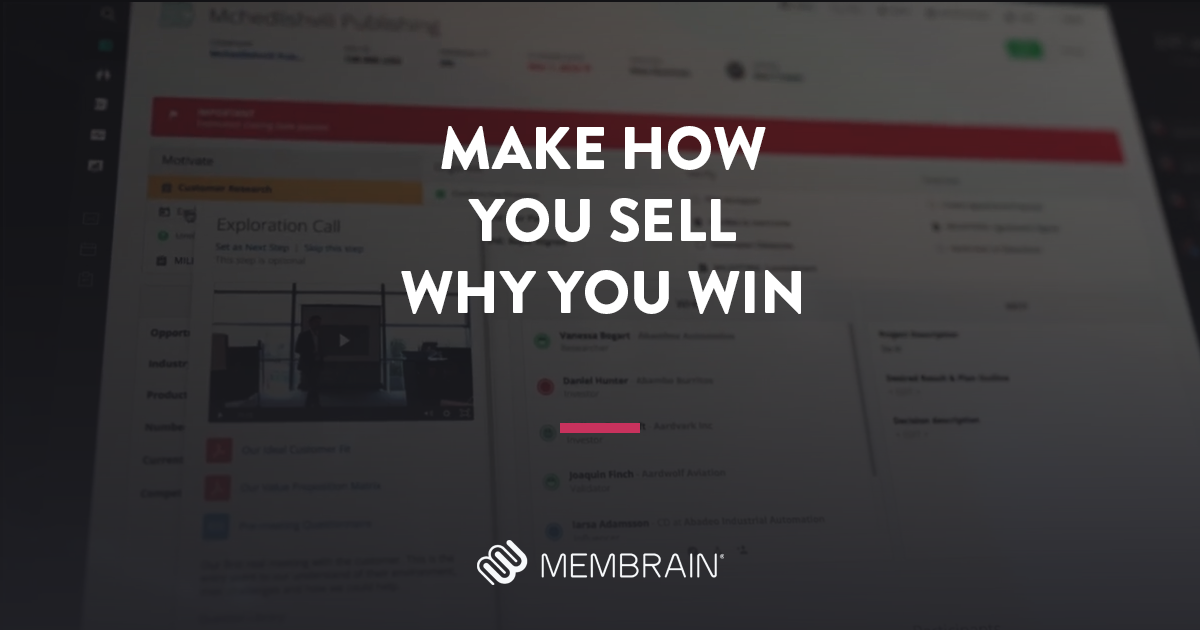
- Medical device sales team that needs a CRM built specifically for complex, methodology-driven selling → Membrain. Purpose-built for long, complex B2B sales — stakeholder mapping, sales playbooks, and guided selling are native features, not add-ons. The best fit for device companies with a defined sales methodology (SPIN, Challenger, or custom) they want enforced in the tool.
- Startup or small device company that needs a simple, visual pipeline without complexity → Pipedrive. The fastest to get running — import contacts, define stages, start logging activity. No admin overhead. Best for pre-Series B device companies still defining their sales process.
Field rep and compliance considerations
Medical device field reps have workflows that most CRM vendors don't think about. They need mobile case coverage logging (which procedures they supported in the OR), sample and trial unit tracking (which consignment trays are at which facility), and HCP relationship documentation for Sunshine Act purposes. Salesforce with the right ISV add-ons covers this most completely. Dynamics Field Service covers the inventory side. Membrain covers the sales methodology side. No single CRM off the shelf covers all three without some configuration — plan accordingly.
GPO and IDN contract management is another gap. Most CRMs track deals at the opportunity level but don't have native GPO contract objects. The workaround is custom objects in Salesforce or custom modules in Creatio that represent the GPO contract and link to individual hospital account deals. This matters because a rep's day-to-day selling motion is often against an existing GPO contract, not a new opportunity from scratch.
Trial advice
Test your finalists with a realistic account: create an IDN with two child hospital accounts, add three stakeholders with different roles (surgeon, materials director, CFO), build a pipeline stage for "clinical evaluation in progress," and log a field visit with custom fields for procedure type and competitive product displaced. The CRM where that takes under 30 minutes and the mobile app is usable in a hospital parking lot is the one your field team will actually adopt.